Thinking about crossing the state line from North Carolina to South Carolina? It can sound simple on paper, but your monthly costs, closing process, and day-to-day lifestyle can look different once you start comparing homes. If you are planning a move and want fewer surprises, it helps to understand the basics before you make an offer. Let’s dive in.
Compare Taxes First
One of the biggest questions buyers ask is whether South Carolina is automatically cheaper than North Carolina. The short answer is no. Your total cost depends on how the property is taxed, where it is located, and how your household income fits each state’s tax structure.
According to the South Carolina Department of Revenue, South Carolina taxes owner-occupied primary residences at 4% of fair market value, while many other real estate types are assessed at 6%. That classification matters because it can change your property tax bill in a meaningful way. Local millage rates still apply, so two homes with similar prices can have different tax bills depending on the county or municipality.
North Carolina works differently. The North Carolina Department of Revenue says real property is appraised at true or market value under county reappraisal cycles, and property tax is locally assessed and collected. In other words, both states use local tax offices, but South Carolina’s primary-residence classification is one of the biggest structural differences for buyers moving across the border.
Understand Income and Sales Tax
Property taxes are only part of the picture. If you are comparing your overall cost of living, income tax and sales tax deserve a close look too.
South Carolina uses a graduated income tax system, and the 2025 top marginal rate is 6%. North Carolina’s individual income tax rate is 4.25% for taxable years beginning in 2025 and 3.99% after 2025, so the move is not automatically a lower-tax decision. Depending on your income and deductions, the answer may be different for your household than it is for someone else.
For everyday purchases, South Carolina has a statewide sales tax of 6%, with possible local add-ons. North Carolina’s combined general sales and use tax rate is 7% in all 100 counties under the current guidance cited in the research. If you are budgeting for life after the move, this is another reminder that there is no one-size-fits-all answer.
Know How SC Closings Work
If you have only bought property in North Carolina, South Carolina’s closing process may feel different. One of the biggest differences is the role of the attorney.
The South Carolina Bar explains that title abstracts, preparation of legal instruments, the closing itself, and recording documents are treated as legal work that must be supervised by a licensed South Carolina attorney. That means you should expect an attorney to play a central role in your transaction.
For many buyers, that simply means more coordination and more document review during the final stretch. It is not necessarily a problem, but it is something to plan for early. If you are moving on a tight timeline, confirming your lender and attorney schedule up front can help you avoid unnecessary delays.
Prepare for Closing Costs and Timing
Mortgage buyers also need to pay attention to federal timing rules. The Consumer Financial Protection Bureau says you must receive your Closing Disclosure at least three business days before closing.
That document should outline your loan terms, closing costs, property taxes, homeowners insurance, and flood insurance if required. The CFPB also recommends getting a home inspection before you are fully committed to buy and remembering that an appraisal is the lender’s estimate of market value, not a substitute for an inspection.
As you budget for a South Carolina purchase, plan for standard mortgage-related charges such as appraisal fees, title or settlement fees, prepaids, and insurance escrows. The exact numbers will vary by property and loan, but the categories should not come as a surprise if you review them early.
Verify the Tax Classification
This is one of the most important steps when moving from North Carolina to South Carolina. Before you make an offer, verify how the property is classified for tax purposes.
A home that will be your primary residence may be taxed differently than a second home or investment property. Since South Carolina property tax rules are classification-driven, you do not want to assume the tax bill based only on the list price or city name.
If you qualify, South Carolina also offers a homestead exemption for homeowners who are age 65 or older, totally and permanently disabled, or legally blind on the first $50,000 of fair market value of the legal residence. That may be relevant if you are planning a retirement move or helping a family member relocate.
Compare York County Options
For many North Carolina buyers, the first South Carolina stop is York County. The county includes Fort Mill, Tega Cay, and Rock Hill, and it describes itself as one of the fastest-growing counties in South Carolina.
These communities are often compared by buyers who want access to the Charlotte area while living in South Carolina. Each one offers a different feel, so it helps to match your goals to the setting rather than assuming they are all the same.
Fort Mill Basics
Fort Mill is often a top choice for buyers who want a fast-growing suburban market near Charlotte. The town’s comprehensive plan describes it as one of the fastest-growing municipalities in South Carolina and notes its connection to Charlotte’s employment base, along with parks, greenways, neighborhoods, and community history.
If your move is tied to commuting, convenience, or a newer-growth setting, Fort Mill is often one of the first places to explore. Your exact monthly costs will still depend on the property, tax classification, and local fees, but the location remains a major draw for cross-border movers.
Tega Cay Basics
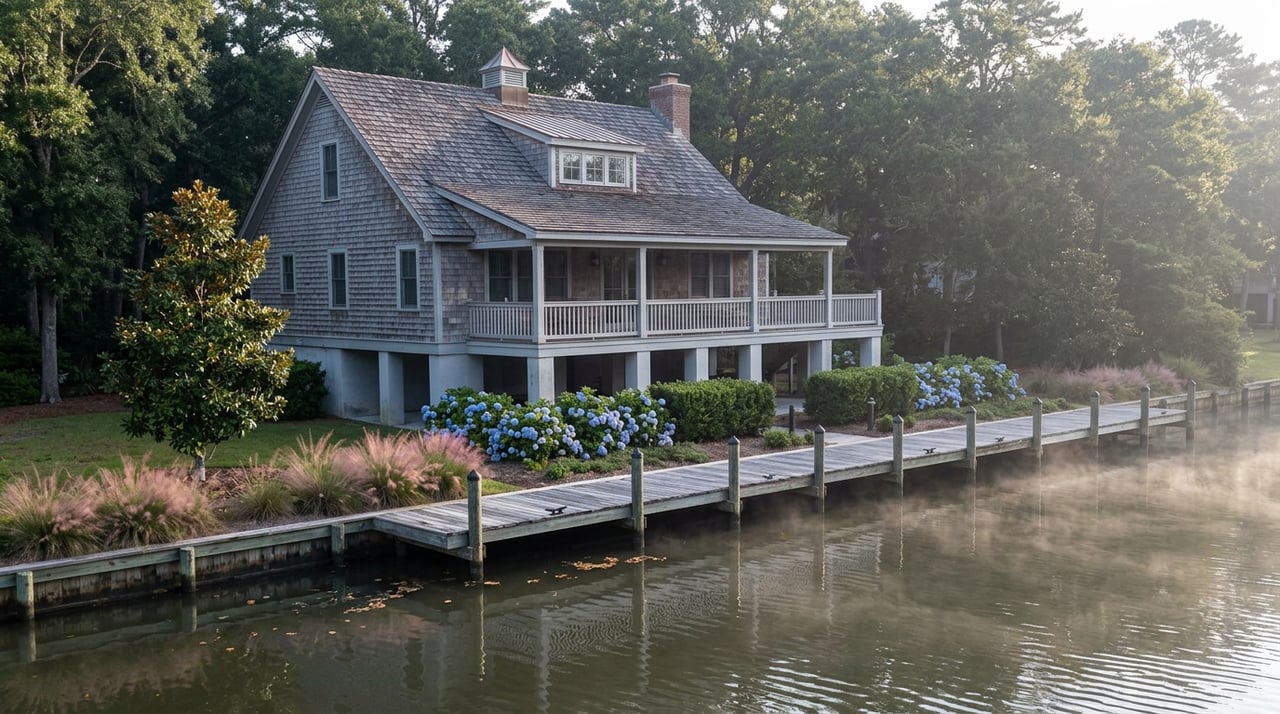
If a lake-oriented lifestyle is high on your list, Tega Cay stands out. The city describes itself as a waterfront community on Lake Wylie between Charlotte and Rock Hill, with lake access, marinas, trails, parks, and lakefront facilities.
For buyers comparing suburban and lifestyle options, Tega Cay offers a different day-to-day experience than a more traditional inland neighborhood. If water access and outdoor recreation matter to you, this is an area worth a closer look.
Rock Hill Basics
Rock Hill offers a larger and more established city setting. The city says it is the largest city in York County, about 20 miles south of Charlotte, and describes itself as a blend of historic charm and responsibly implemented expansion.
Rock Hill also provides city utilities including electric, water, sewer, sanitation, and stormwater service. When you are comparing total monthly carrying costs, utility structure and service setup can be an important part of the conversation.
Questions to Ask Before You Buy
Before you move from North Carolina to South Carolina, make sure you get answers to a few key questions:
- Is this property classified as a primary residence or something else for tax purposes?
- What local millage applies to this address?
- What will my estimated closing costs look like?
- Who is the closing attorney, and what timeline should I expect?
- Are there any utility or insurance costs I should confirm before making an offer?
These details are property-specific. They should be verified early, not assumed based on a listing, a neighborhood name, or a quick online estimate.
Make the Move With Clarity
Moving across the NC-SC line can open up great options, especially in York County communities like Fort Mill, Tega Cay, and Rock Hill. But the smartest move is not just finding a home you like. It is understanding the taxes, closing process, and local cost structure so you can buy with confidence.
If you are planning a move and want local guidance on South Carolina communities, property comparisons, and the buying process, connect with Paige Boykin. Let’s walk you home.
FAQs
Is moving from North Carolina to South Carolina automatically cheaper?
- No. Your total cost depends on income tax, sales tax, property tax classification, local millage, and property-specific expenses.
Do you need an attorney for a South Carolina real estate closing?
- South Carolina buyers should expect a licensed South Carolina attorney to be involved in supervising key parts of the closing process.
What property tax difference matters most in South Carolina?
- One of the biggest differences is that owner-occupied primary residences in South Carolina are assessed at 4% of fair market value, while other real estate is generally assessed at 6%.
Which York County area should you compare first when moving from North Carolina?
- Many buyers start with Fort Mill, Tega Cay, and Rock Hill because each offers a different setting, from fast-growing suburban areas to waterfront living and a larger city environment.
What should buyers verify before making an offer in South Carolina?
- Buyers should confirm the property’s tax classification, local millage, estimated closing costs, and timeline with the lender and closing attorney before moving forward.